What is IEC and Why Every Indian Importer Needs It
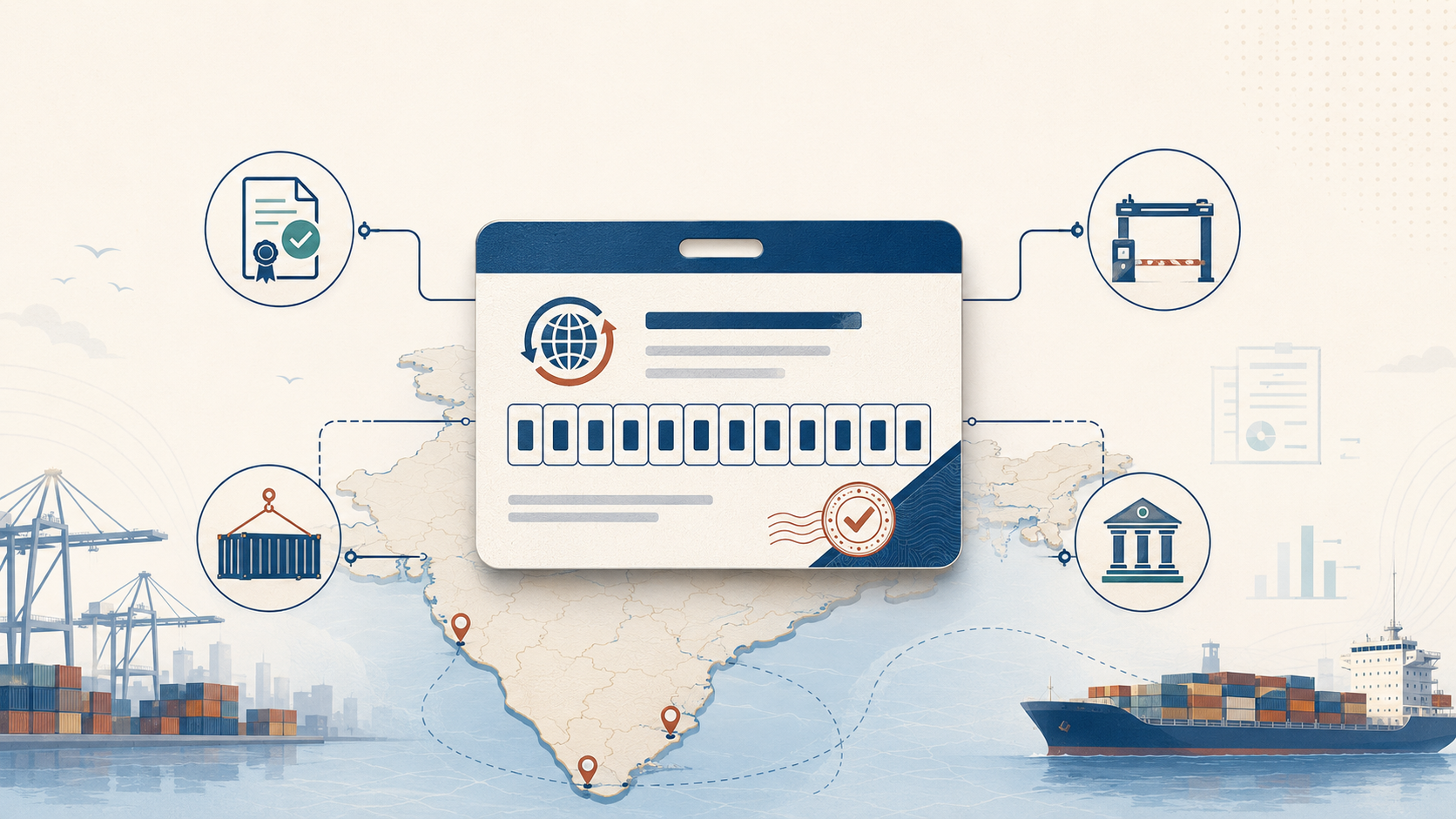
If you are buying or selling goods across India's borders and you don't have an IEC, you are not just working informally — you are working illegally. I've met traders who have been in the dhanda for years and still don't fully understand what the IEC is or why it exists. This post fixes that.
What IEC actually is
IEC stands for Import Export Code. It is a 10-digit alphanumeric identifier issued by the Directorate General of Foreign Trade (DGFT), which is a body under India's Ministry of Commerce and Industry.
Every entity — individual, proprietorship, partnership, LLP, or company — that wants to import goods into India or export goods out of India is required to have an IEC. There are a handful of exemptions (certain government departments, personal imports below a threshold), but for any commercial cross-border trade, the IEC is mandatory.
Think of it the way you think of a PAN card for income tax. Except instead of your tax identity, it's your trade identity. The IEC is how DGFT, Customs, and the banking system know you are authorised to do international business.
Why the IEC exists
India's foreign trade is governed by the Foreign Trade Policy (FTP), which DGFT administers. The IEC is the anchor of that policy's enforcement mechanism.
When a shipment clears Indian Customs — inbound or outbound — the IEC is declared. Customs reconciles it with GSTIN. The bank that processes the foreign currency transaction also records the IEC. DGFT uses this data to track trade flows, monitor export obligations, and flag anomalies.
From a practical standpoint, no freight forwarder, CHA (Customs House Agent), or bank will process your trade documentation without an IEC. It is not a formality. It is a hard dependency in the system.
Who needs an IEC
You need an IEC if you are doing any of the following commercially:
- Importing raw materials, components, or finished goods into India
- Exporting Indian-origin goods to buyers abroad
- Importing goods for re-export (entrepôt trade)
- Running an STPI or SEZ unit
- Acting as a commission agent or trading house in international trade
You do not need an IEC if you are importing goods strictly for personal use (not for resale), or if you are a government entity that qualifies under specific exemptions.
If you're a manufacturer supplying to an exporter, you technically don't need your own IEC — the exporter's IEC covers the shipment. But if you ever plan to export directly, you'll need one.
How to get an IEC
The IEC application process moved fully online through the DGFT portal at https://www.dgft.gov.in. Here is the current process as of early 2026:
What you need:
- PAN card of the entity (individual or business)
- Bank account in the entity's name (current account for companies and firms, savings acceptable for proprietors)
- Address proof
- A digital signature or Aadhaar-based e-sign
The process:
- Register on the DGFT portal with your PAN
- Complete the online IEC application (Form ANF 2A)
- Pay the application fee (₹500 as of now — this is not a typo, it is genuinely ₹500)
- Verify via Aadhaar OTP or DSC
- IEC is typically issued within 1–3 working days, sometimes same day
The IEC is now permanently linked to your PAN. It doesn't expire. Once issued, it is valid for the lifetime of the entity, subject to annual renewal (which is free and takes about two minutes online).
The annual update that most traders miss
Since 2021, DGFT requires all IEC holders to update or confirm their IEC details once every financial year between April and June. This is done through the DGFT portal and takes under five minutes if your details haven't changed.
If you don't do the annual update, your IEC status changes to "inactive." An inactive IEC will be rejected by Customs at the time of clearance. I have seen traders discover this problem at the port when a shipment is already sitting in a container. That is not where you want to find out.
Set a calendar reminder: first week of April, every year, log in and confirm your IEC.
What an IEC tells you about a supplier or buyer
Here is the part that's relevant if you're on the verification side of a transaction rather than the registration side.
When I get a new supplier or buyer who claims export or import experience, one of the first things I do is ask for their IEC and verify it on the DGFT portal. The portal is public and free. Enter the IEC number and you get back:
- The registered legal name of the entity
- The Permanent Account Number (PAN) linked to it
- The registered address
- The IEC status — active, inactive, suspended, or cancelled
Cross these four data points with what the supplier has told you. Name mismatch is a strong red flag. Address in a completely different state from where they claim to operate needs an explanation. Suspended or cancelled IEC means they either haven't done their annual update (sloppy) or they've had their code suspended by DGFT for a compliance violation (serious).
An IEC that checks out is not a trust certificate. But an IEC that doesn't check out is an immediate stop.
Vetrade pulls IEC verification automatically as part of its supplier check report — along with GSTIN status, B2B presence, and news scan — so you're not opening five government portals manually for every new counterparty. One report, under 60 seconds: vetrade.unceasingimpex.com
A situation I've seen more than once
A trader contacts me asking about incense exports. They have buyers lined up. They have samples ready. They've quoted prices and the buyer wants to move.
They don't have an IEC.
The IEC takes one to three days under normal circumstances. But their CHA is now waiting, the buyer has a deadline, and the trader is trying to run the shipment under a relative's IEC "just this once." That is not a solution — it is a compliance violation and it creates a documentary trail that can surface later.
Get the IEC before you need it. The ₹500 and three days of processing time are the cheapest part of international trade.
Key Takeaways
- IEC is mandatory for all commercial cross-border trade in India — no exceptions for any legitimate importer or exporter
- Apply online at dgft.gov.in for ₹500; typically issued in 1–3 working days
- Annual confirmation between April–June is required to keep the IEC active
- When verifying a supplier or buyer, always cross-check their IEC on the DGFT portal — name, address, PAN, and status must all be consistent with their claims
- An IEC that doesn't match is a red flag; a missing or inactive IEC from a claimed exporter is a serious one
Have questions or a fraud case you want to share? WhatsApp Aditya directly: +91-7517231254
Next up
How to Verify a Supplier in India Before Wiring Money
A 9-year trader's step-by-step checklist to verify any Indian supplier before payment. IEC, GSTIN, B2B presence, real fraud cases included.
The Real Cost of Dealing with Unverified Incense Suppliers
A ₹4 lakh lesson in why the cheapest quote is almost never the cheapest order. Field notes from running an incense export business in India.